Brokenness>anger, fear, and judgment

Jonas Salk is quoted with “Hope lies in dreams, in imagination, and in the courage of those who dare to make dreams into reality.”  When I read this quote, I can’t help but ask the question: where has the hope gone.  

Years ago, I did a sermon series and through the series I included the following big idea: for, not against.  With the idea that the church world needed to be known more for what they were for than what they were against.  I fear that we are living in times when this is often not the case.  Sadly, much of the church world has taken their cues not from the Scriptures but rather they have taken their cues from culture and politics.  I fear that many Christian leaders may have replaced time in their studies with time spent with their favorite cable news commentor.  We must get back to the place where we, like John Wesley, strive to be known as men and women of one book and not men and women of one political persuasion.

I was born in 1979 and grew up in the height of the purity culture and culture wars.  Like many in that era who were from the more conservative persuasion, there was a time when I was a disciple of Dr. James Dobson and Rush Limbaugh.  When I was in my 20’s I tuned both of them out.  I distinctly remember the day that I was at work and had Rush Limbaugh playing in the garage bay that I was working in.  I was struck with the thought; all Rush did was make me angry.  I was not full of compassion as Jesus was when He surveyed Jerusalem and wept over those who never get it.  I was just mad because people were living like they would never get it.  

With Dr. Dobson it was different.  I have fond memories of things that came from his organization like “Adventures in Odessey” and the recommended book for my wife and I, “The Strong Willed Child.”  At the same time, when I think of Dr. Dobson, I have a much different perspective than many.  I know this will upset many but again please remember I am sharing my perspective that I gained as a youth.  It is one that I have carried with me since the 80’s when Christian’s began reading every label in the grocery store to make sure they were boycotting the proper company.  This stuck with me.  Dobson to me, even as a child, represented a voice that typically sounded kind but took every opportunity he could to point how the church was under attack.  During this time, his views were tied directly to politicians.  For many people of my generation, we grew up believing a politician, not Jesus, was the hope of America.  Some of you probably even had a friend or relative that had a picture of Ronald Reagan somewhere in their home and every two years you got a voting guide that was either mailed to your home or passed out in your church.  This voting guide told you exactly how to vote and somewhere in the process you were told, this is the most important election ever. 

In the mid to late 90’s there was a season where I attended a King James only Independent Fundamental Baptist Church.  Here, protecting the 1611 KJV Bible was seen as more important than protecting anything else.  Some refer to this not as King James only but King James ugly.  There was an ugliness that existed in this isolationist cult-like corner of Christendom.  I believe they truly love Jesus, and they truly will be in heaven someday but when they get there, they will be shocked to find that St. Peter isn’t going to be speaking the King’s English at the pearly gates.  They will be equally as shocked when they realize that the worship in heaven might include cymbals and won’t be a collection of their favorite hymns.  The most shocking of all is that they will encounter not just fundamental Baptists in heaven but will worship with people that they thought would never be there.  They would see Lutherans, Catholics, Methodists, Presbyterians, Charismatics, Wesleyans and others.  While my first question to Jesus might be, “can you introduce me to your mom,” they will be asking “why are all these reprobates in heaven?”  This may sound harsh but what I learned in this period of my life was that everyone was wrong and liberal but us.  

I no longer ask Rush Limbaugh, Dr. Dobson, or Independent Fundamental Baptists for their opinions when I seek to engage with the world around me.  I now ask Jesus.  I look to the character, actions, and words of my Savior.  Limbaugh made me angry, Dobson made me scared, and the Fundy’s made me judgmental.  Jesus provides another path.  I am now full of hope.  I am now more compassionate.  I am now more patient.  I am now more forgiving.  I am now more loving.  I hope that I am now more like Jesus.  

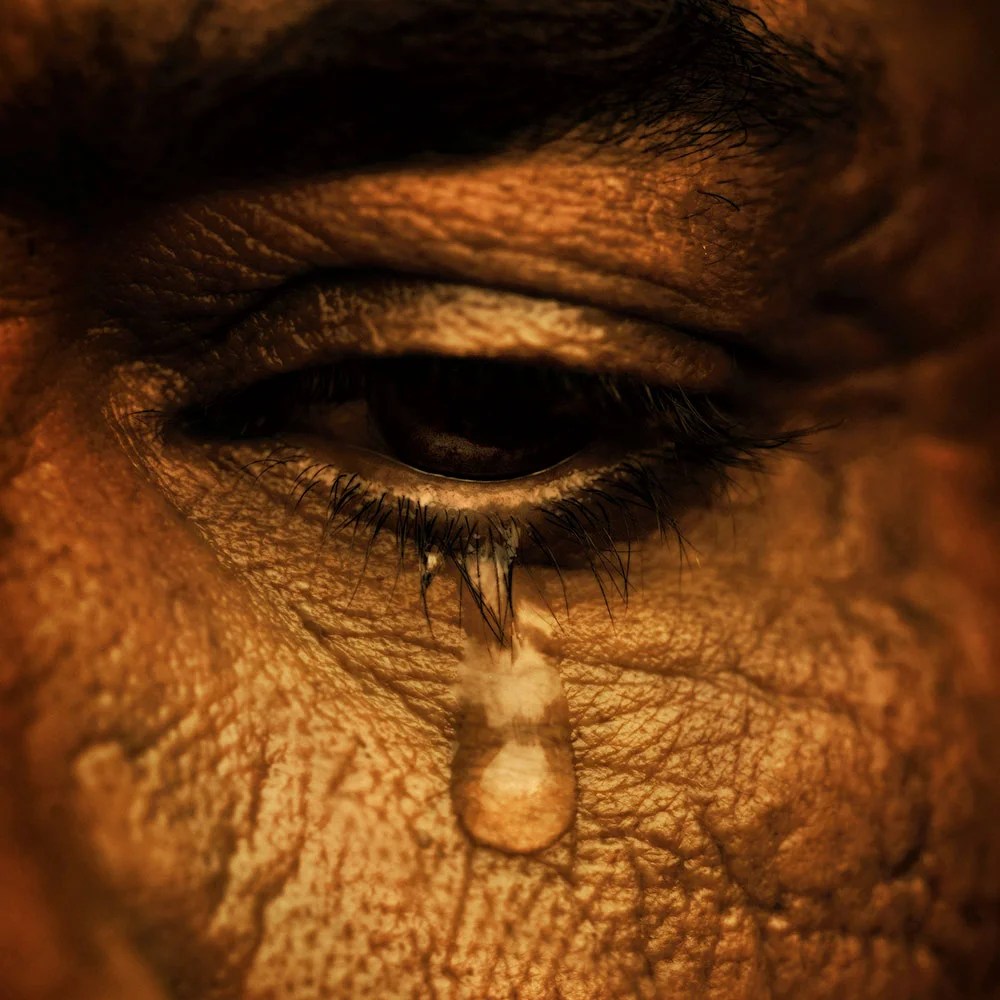
Above all, I am heartbroken. 

I routinely pray that I would resemble Jesus who went up on the mountain top that overlooked Jerusalem and wept.  Even though Jesus knew that the people in the city below would viciously murder Him, He wept over their spiritual condition and the future that awaited them.  He wanted better for them.  Ultimately, this broken heart, drove Him to walk back down that mountainside, walk back into Jerusalem, and walk to the cross where He would be crucified to pay for the sins of His executioners and others.  There He would declare, “Father, forgive them for they know not what they do.”

I find heartbreak is a much better place to live out my life than anger.  Heartbroken people tend to live lives determined to heal where anger when it sits long enough often only creates wounds and division.  Jesus, the Great Physician, offers healing where much of His church offers outrage.  He offers hope where those who claim to follow Him often offer judgement.  

Friends, let’s not forget, “we wrestle not against flesh and blood.”  When we do, our outrage is directed towards those that Jesus directs grace towards.  May we too weep over our cities.  May we too pray, “Father, forgive them for they know not what they do.”

When we fix our eyes on Jesus, we become men and women of hope.  Jesus did not just weep over the nation; He provided a solution and invited them into a right relationship with His Father.  He provided hope.  Restoration of humanity was no longer just a dream but a reality to be grasped.  This is found in Christ alone.  

A White Christian’s Reflection on Racism and Juneteenth

When I was 11, I was sitting in my neighbor’s kitchen sipping on a glass of sprite.  This was tradition after all.  When I finished up mowing my elderly neighbor’s lawn, she would pay me and then give me cookies and sprite.  Sometimes we sat and chatted for 45 minutes or more which caused my parents to jokingly call this older woman my girlfriend.  One day while enjoying our sprite and cookies, she told me about people who had recently looked at the home for sale next door.  She was quite worried too.  After all she did not want them moving next door to her.  She did not want black next-door neighbors.

When I was in my teens, I worked at a Christian camp and served under a man that I loved.  He was an amazing Bible teacher and had a deep love for people and deep love for sharing the gospel.  He was a gifted evangelist and used his gifts well.  When someone would do something out of line it was not uncommon for him to refer to them as a “cotton picker.”

When I was 21, I was doing an internship at a ministry that reached out to town kids.  In fact, it was right down the road from the local high school.  This town also was quite diverse for the area we were living in.  One day I was headed somewhere with the man I was doing my internship under.  A man who was also a pastor.  We passed a park bench in town where 3 teenagers were hanging out and he said, “I hate to see that.”  Naively I asked, “what teens hanging out on main street?”  He replied with, “No, a pretty white girl hanging out with black guys.” 

When I was 22, I was attending Bible college and working with their maintenance department.  One day me and another guy who worked for the college took a drive across town with a school van to pick up something from a storage unit.  The storage facility was in the midst of a residential community just off the highway.  As we were pulling into the facility the college employee said something I didn’t quite make out. I said, “What?” He nodded towards the porch where a black family was sitting enjoying the summer air and repeated himself and said, “I call them porch monkeys.”  He then laughed at this incredibly racist remark.

When I was 26, I took my very white youth group out of our very white town to a conference in the south.  I remember rolling up to a stop light.  My fellow youth worker said, “lock the doors.”  I said, “why?”  She then eyeballed the black man standing on the corner.

When I was in my 30’s, I learned for the first time what redlining was.  Growing up I remember there being a black part of town.  I did not understand that this was by design and represented a much larger systemic issue.

When I was in my 40’s, I learned what Juneteenth was.  Like many others I was unaware of the history behind it and had no clue that Texas still had slavery when the rest of the country had abolished it.  It wasn’t till Juneteenth was signed into law that this truth would come out.  Still, people would claim that this holiday was made up and that we already had an Independence Day.  

The sad truth is the items listed above took me 5 minutes to think about.  They came to me but stuck with me because I have always felt that these things were wrong when so many in my world have normalized them.  So many Christians have normalized these behaviors and thus projected diminishment rather than love.  

When I began to study redlining it dramatically changed my eyesight.  I began to understand at a much deeper level what the issues were within our society and began at times to call out those behaviors that once were deemed as normal.  I began to inwardly cringe when color became a defining factor rather than character.  When people say, “I met a very helpful guy yesterday, he was a black guy, and he gave directions to the pizza shop.”  How is the race of the helpful person helpful to the conversation?  I wouldn’t describe a white person this way.  I would simply say, “I had to ask for directions to the pizza shop.”  It’s almost as if the words “helpful” and “black” combined provide a shocking detail to the story like the good Samaritan story that Jesus told.

I have had a lifelong love of hip-hop, R&B, and gospel music.  I was drawn to it at a young age and even last night I was driving my truck blasting hip hop.  Not because I want to be cool (trust me, I am not) but because I simply love the music.  As a kid, my love of this  caused a pastor to call me out from the pulpit and my choice of music was often referred to as jungle jive.

I was a kid when I first heard about Equal Opportunity Employment.  I saw a construction zone and saw a lady holding a flag.  It was stated that she checked two boxes because she was both black and a woman.  There was no thought given to the fact that she was probably quite qualified for her job and might have been taking a break from operating equipment.  In fact, the opposite was true, it was insinuated that she was not qualified because she was a black woman in a construction zone.

As my eyes have opened, it has become quite apparent to me that racism has surrounded me my entire life. Now some will accuse me of wokeness for saying this.  I am at the point where I simply don’t care.  Seeing people’s struggles is a fruit of loving them and therefore that accusation is not an insult but rather an encouragement that I am doing it right. 

So why do I write this on Juneteenth?  I write this to say, that I wrote this entire article in 20 minutes.  Thinking of examples of what to write was incredibly easy.  If I put the time in, I could probably write thirty pages of things that I would classify as racist that were said or done by people that I know and most of them are people that would tell you that they are Christ followers.  This is a problem.

  • To my knowledge, nobody has ever hoped I wouldn’t buy the house next to them.  
  • To my knowledge, nobody complained that I hung out with girls when I was a teen.  
  • To my knowledge, nobody uttered racial slurs because I just wanted to spend time with my family on my front porch during the summer.  
  • To my knowledge, nobody ever locked their car door when I stood on a street corner.
  • To my knowledge, nobody denied my parents a mortgage because it was in the wrong part of town. 
  • To my knowledge, nobody questioned my credentials because of my skin color. 
  • To my knowledge, nobody denied my grandparents from the ability to vote.  
  • To my knowledge, nobody refused payment of the GI bill when my grandfather got home from WWII. 
  • To my knowledge, my mother did not have to use the side entrance to the movie theatre and then sit on the balcony.  
  • To my knowledge, my parents weren’t forced to walk to their underfunded school while the other kids’ road a bus to their school where resources abounded.  

Some would call this white privilege.

The question should not be, is this woke?  The question should be, is this truth?

So, this Juneteenth do me a favor.  I want to encourage all my white friends to sit down with a pad and paper.  Write out a list of things you have seen that dehumanizes our black brothers and sisters.  Then maybe when you are done, commit to do better.  Juneteenth is a reminder to all of us that we must do better.  

When we open our eyes to inequity, we quickly are overwhelmed by how many exist.  You can’t fix the world, but you can make those within your world experience more dignity and hope.  This is a responsibility that is on you and is on me.  So, this Juneteenth, speak up, stand up, listen better, and love better.